`SKYWATCH
by Jarrett DuBois.

  Publishers, Article Order form.   Publishers Photos Order form.   Private Photos Order form.   Writers Articles page.   FPINS Home page.


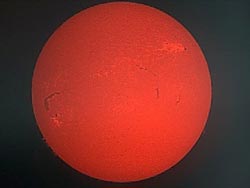
Hydrogen Alpha Solar Surface.

Photo by: Jarrett DuBois


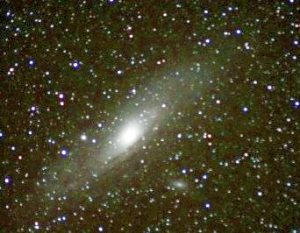
Andromeda Galaxy.

Photo by: Jarrett DuBois


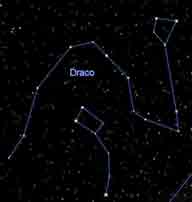
Click on Chart to enlarge.


by: Jarrett DuBois


To use the accompanying chart, go out within an hour of the times listed and hold the chart above your head. Make sure that you have North on the chart lines up with North at your location. The chart will now be oriented to the night sky and the stars on the chart will closely match those seen in the sky. The chart is printed for 42 degrees north latitude. If you are located north of this latitude, stars in the southern horizon will be lower. If you are far south of this latitude, the opposite is true. All times are listed in the Central Time Zone. Add or subtract the appropriate number of hours from the listed times for your time zone.


Library of Images by Mr. Jarrett DuBois immediately available from FPINS International and Foto Expression.


WEEKLY SKYWATCH


By Jarrett DuBois

Down to Earth Astronomy

November 30 - December 6, 2008

Planets – Venus is low in the south/southwestern sky during twilight. Venus will be to the right of the moon on 12/1. Jupiter is in the south/southwestern sky during twilight. Jupiter will be to the right of the moon on 12/1. Saturn is in the southern sky before sunrise.

Moon
– First Quarter Moon: 12/5.

Comets - none visible to the unaided eye.

Deep Space – The familiar pattern of stars that make up the Big Dipper are low to the northwestern horizon during early evening.

Meteor Showers – The minor meteor shower, the Alpha Puppids, peaks from 12/2-5.

Keep looking up. You never know what you'll observe and enjoy in the night sky!


The December 2008 Sky. ( 378 words)

The long, dark nights of December will bring beautiful celestial sights for stargazers throughout the month. The winter season begins on 12/21 at 6:04 AM Central Standard Time. December brings the return of the brightest star in our night sky and some truly beautiful deep space objects to enjoy.

            The two bright planets to enjoy this month are Venus and Jupiter. They can be found low in the southwest sky early in the evening. Both of these planets will be to the right of the moon on 12/1. Venus is brighter than Jupiter and is closer to the moon on that evening. On 12/31, Venus will be below the moon.

            The lone predawn planet this month is Saturn.  ..................

................ also known as the “Dog Star”, can be easily found by following the three main belt stars of the constellation of Orion back down to the horizon. They will lead you to Sirius, a relatively close star that is just over 8 light years away. Sirius goes through some interesting changes as it rises, much the same as Venus does when it is close to the horizon. Sirius dances and changes color, as if looking through a prism. Once you see this happen, you can understand why this star is often reported as a UFO, when in fact it’s bright Sirius “dancing” due to atmospheric distortion.

The featured area of the sky this month is the constellation Canis Major, home to Sirius, the Dog Star.

Holiday Shopping List.

Once again it’s that time of year when the holiday shopping is in full force, and many people are interested in astronomy equipment as holiday gifts. One of the hot products this season is the personal handheld planetarium, such as the Meade Instruments MySky or the Celestron Sky Scout. There are many new products available this year for amateur astronomy, so here are some tips to help you make the most of your holiday purchase of astronomy equipment.

            Binoculars are a great way for all to get a start in astronomy. A good all-purpose pair of binoculars is the 10x50, where 10 is the magnification and 50 is the diameter of the front lens in millimeters. They can also be used for bird/nature studies and sporting events. For night sky viewing you should avoid the fixed focus type. Fixed focus binoculars are OK for bird watching or sporting events, but when you use them for astronomy, objects appear fuzzy because the image is beyond their range of focus. Also, look to see if the binoculars will accept an L-bracket for mounting to a tripod. This accessory is a must if you would also like to use your binoculars for nature studies and bird watching. Binoculars get heavy and hard to hold steady. By mounting them to a tripod, you will get the best views and save your arms from getting tired.

            If you are interested in purchasing a telescope, there are a few key questions that will help you narrow your choices and make the best selection. The main question is cost and how much you can afford to spend on an instrument. Once you have a price range in mind, the other important questions include: How much will you use it? How easy is it to set up and use? Can you get accessories? One of the best places to start is by looking at one of the astronomy publication like Sky & Telescope or Astronomy. Many of your questions will be answered by reading the ads and by calling or visiting the websites of the manufacturers listed in the magazines. There are numerous companies that advertise in these magazines and they are always helpful answering questions and giving suggestions.

            Happy Holidays, good luck with your purchase, and have fun as you search the night sky for those celestial delights.


.